

Latonya Washburn @ latonyas43251 Member Since: 22 Jan 2025
 South Africa
About Me
Airlines Concentrate On Biofuel Trials Gather Momentum
It's bad enough for some prop airplanes to be referred to as being powered by elastic band. Now the skeptics could start having a dig at business airplane flying on whatever from cooking oil to liquefied algae.
With the civil aviation industry under increasing pressure from rising oil rates and environmental legislation, the race is on to find practical options to traditional kerosene and these up until now appear to boil down to different types of biofuel.
Not remarkably, the first trials of alternative fuel were started by British aviation pioneer, Sir Richard Branson, whose Virgin Atlantic began London to Amsterdam flights with minimal biofuel use in 2008. This was rapidly followed by Lufthansa and Air New Zealand who each used various blends of regular fuel and bio derivatives consisting of some from made from jatropha which can grow in soil considered too bad for growing mainstream foods.
Jatropha is a genus of roughly 175 succulent plants, shrubs and trees (some are deciduous, like Jatropha curcas), from the household Euphorbiaceae.
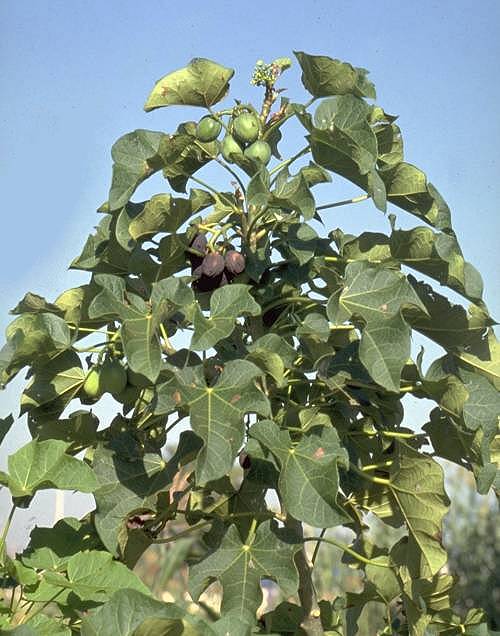
In 2007 Goldman Sachs pointed out Jatropha curcas as one of the best candidates for future biodiesel production. It is resistant to dry spell and bugs, and produces seeds including 27-40% oil.
Recently, US aerospace giant Boeing, Brazilian aeronautical significant Embraer and the Sao Paulo state Research Support Foundation relocated to perform research study and development into the use of biofuels to power jet airliners. It was reported that Brazilian airlines Azul, Gol, TAM and Trip would function as tactical experts for the project.
The current airline company to begin try out new fuels is the Alaska Air Group which has carried out internal US flights utilizing a blend of 80 % petroleum based fuel and 20% biofuel made from cooking oil. This mixture, it is declared, can cut damaging emissions by 10%.

One really encouraging development has actually been the relocation far from biofuels which complete head on with food consumers consequently preventing a cost spiral. Not so long earlier, a surge in use of biofuels in automobiles caused a spike in maize costs as US farmers diverted excessive corn to fuel processing.
Hopefully in the future, airlines and motorists will focus biofuel on non-food sources such as jatropha and algae. It would be a mixed blessing undoubtedly if some individuals ended up starving simply to satisfy another person's green qualifications.
Rating

Worsem connects businesses with freelancers offering digital services. world's largest freelance services marketplace.